Menu



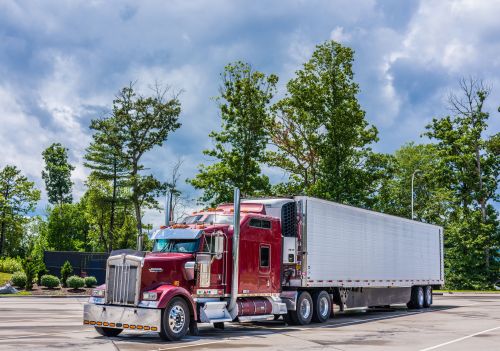
As autonomous trucks enter commercial service, the technology promises safer highways. But it also raises a consequential question for motor carriers and their insurers: Who controls the evidence when something goes wrong?
For decades, investigating a commercial trucking accident has followed a familiar pattern. Attorneys examine the scene, interview witnesses, review the driver’s logs, and reconstruct the vehicle’s movements. Increasingly, electronic control modules and onboard cameras supplement that evidence.
But what happens when there is no driver to interview?
That question is becoming less hypothetical. On October 7, 2026, the Federal Motor Carrier Safety Administration (FMCSA) granted Aurora Operations, Inc., and other qualifying operators of Level 4 autonomous trucks, a five-year exemption permitting cab-mounted warning beacons in place of traditional roadside warning devices. The decision recognizes a practical reality: a truck without a human driver cannot place reflective triangles along the highway.
The exemption is narrow, but its implications are significant. Federal regulators are adapting longstanding safety requirements to accommodate vehicles that operate without human intervention. The legal system must now confront an equally important challenge: determining what happened when those vehicles are involved in accidents.
A Witness That Never Forgets?
Autonomous trucks rely on an intricate network of cameras, radar, lidar, GPS, and onboard computers to navigate the roadway. These systems may generate extensive information about the vehicle’s surroundings, movements, and responses to changing conditions.
Following an accident, that information could prove invaluable.
Consider a collision between an autonomous tractor-trailer and a passenger vehicle merging onto an interstate. Traditional accident reconstruction might depend on conflicting eyewitness accounts and physical evidence. An autonomous system could potentially reveal when the passenger vehicle entered the truck’s detection range, whether the system recognized the hazard, and what braking or steering commands followed.
Yet the existence of such information does not guarantee its availability.
Data may be overwritten, stored remotely, or retained in formats accessible only to the technology developer. Different systems may preserve different information, and a recording of what the vehicle perceived may not fully explain why its software selected a particular response.
The result is a paradox. The most technologically sophisticated vehicles on the highway may generate more evidence than ever before, while making that evidence more difficult to obtain and interpret.
Who Holds the Keys?
For commercial motor carriers, this presents a significant litigation concern.
In conventional trucking litigation, carriers generally maintain substantial control over their operational records. Autonomous operations may distribute critical information among the carrier, vehicle manufacturer, software developer, and third-party technology providers.
That distinction matters when litigation becomes reasonably foreseeable.
Federal and state discovery rules impose obligations to preserve relevant evidence. A carrier’s duty may extend to information held by third parties when that information falls within its possession, custody, or control. But determining control can become contentious when proprietary software, remote servers, and contractual access restrictions are involved.
A carrier that cannot independently retrieve essential accident data may face substantial disadvantages in defending a personal injury claim.
Conversely, technology developers may resist disclosure of source code, system architecture, or proprietary decision-making processes, invoking trade secret protections.
Courts will be called upon to balance legitimate discovery needs against commercial confidentiality, potentially through protective orders, restricted expert access, and carefully tailored production protocols.
The New Accident Investigation
The practical lesson for carriers is straightforward; evidence preservation must begin before an accident occurs.
Agreements with autonomous technology providers should clearly address data ownership, retention periods, retrieval procedures, litigation holds, and cooperation with accident investigations.
Carriers and their insurers should also understand which information their systems actually record. A promise that accident data will be available is of limited value without knowing what is collected, how long it survives, and who can authenticate it.
The same considerations extend to defense counsel. Investigating an autonomous truck collision may require software engineers, digital forensic specialists, and experts capable of distinguishing sensor limitations from mechanical failures or flawed operational decisions.
Autonomous technology may ultimately reduce the frequency of serious trucking accidents. But it will not eliminate litigation.
Instead, it may fundamentally change the evidence upon which liability is determined.
The black box of tomorrow’s commercial truck may contain the clearest account of an accident. The challenge for carriers will be ensuring that someone can open it when the time comes.
If you have questions about this article, contact Michael Armstead (marmstead@setlifflaw.com) at (804) 377-1276, or Steve Setliff (ssetliff@setlifflaw.com) at (804) 377-1261.
Disclaimer: This article is provided for general informational purposes only and does not constitute legal advice or create an attorney-client relationship. Because every legal matter is different, readers should consult with qualified counsel regarding their specific circumstances.
Sources and Legal References
Federal Motor Carrier Safety Administration, “Grant of Application for Exemption; Aurora Operations, Inc.” (Oct. 7, 2026).
https://www.fmcsa.dot.gov/safety/carrier-safety/grant-application-exemption-aurora-operations-inc
Federal Register, Aurora exemption notice (published Oct. 9, 2026).
https://www.govinfo.gov/content/pkg/FR-2026-10-09/html/2026-20734.htm
Federal Rules of Civil Procedure, Rules 26(b)(1), 26(b)(2)(B), 26(c), 34(a) and 37(e) (discovery, protective orders, ESI, preservation).
https://www.law.cornell.edu/rules/frcp
Federal Rule of Evidence 702 (expert testimony).
https://www.law.cornell.edu/rules/fre/rule_702
Editorial note: Legal references provide general background; applicability depends on jurisdiction, contracts, and case-specific facts.
© 2026 Setliff Law, P.C.| View Our Disclaimer | Privacy Policy