Menu



 When a new injury claim comes in from the jobsite, the first question that should be asked is simple: what happened? The answer is usually a simple retelling of how someone managed to injure themselves. They dropped a cinderblock; their glove got caught in something it probably shouldn’t have been near; a piece of debris fell from above; or even “I just turned to get in the vehicle.” All of these can be a prelude to what may be a…
Read More
When a new injury claim comes in from the jobsite, the first question that should be asked is simple: what happened? The answer is usually a simple retelling of how someone managed to injure themselves. They dropped a cinderblock; their glove got caught in something it probably shouldn’t have been near; a piece of debris fell from above; or even “I just turned to get in the vehicle.” All of these can be a prelude to what may be a…
Read More
 For many of us, the last couple of years have seen significant changes that have caused a shift in how we have decided to shop for homes. Many employers are moving towards remote work for increased productivity and overhead cost savings, leading many employees to trade in their commute friendly home for something larger, albeit more distant. As businesses closed their doors, former employees found themselves moving to new locations for work. Those who were also hit economically ended up…
Read More
For many of us, the last couple of years have seen significant changes that have caused a shift in how we have decided to shop for homes. Many employers are moving towards remote work for increased productivity and overhead cost savings, leading many employees to trade in their commute friendly home for something larger, albeit more distant. As businesses closed their doors, former employees found themselves moving to new locations for work. Those who were also hit economically ended up…
Read More
 The Americans with Disabilities Act (ADA) became law in 1990 and prohibits discrimination on the basis of disability in employment, state and local government, public accommodations, commercial facilities, transportation, and telecommunication. The ADA protects individuals who themselves have disabilities or those who have a relationship or association with an individual with a disability. As defined by the ADA, an individual with a disability is someone with a physical or mental impairment that substantially limits one or more major life activities,…
Read More
The Americans with Disabilities Act (ADA) became law in 1990 and prohibits discrimination on the basis of disability in employment, state and local government, public accommodations, commercial facilities, transportation, and telecommunication. The ADA protects individuals who themselves have disabilities or those who have a relationship or association with an individual with a disability. As defined by the ADA, an individual with a disability is someone with a physical or mental impairment that substantially limits one or more major life activities,…
Read More
 If you are a member of a company in any industry, you likely have an online presence. The value and positive impact of a commercial website is critical and necessary today. Your website represents you, putting forward the image you want customers and employees to have of your company. You may have spent a great deal of time and money making sure it looks and functions just the way you want. Even so, you may still be at risk for…
Read More
If you are a member of a company in any industry, you likely have an online presence. The value and positive impact of a commercial website is critical and necessary today. Your website represents you, putting forward the image you want customers and employees to have of your company. You may have spent a great deal of time and money making sure it looks and functions just the way you want. Even so, you may still be at risk for…
Read More
 One of the few successes that the trucking industry has enjoyed in recent years in its continuing effort to curtail the piratical practices of towing companies came in the most recent General Assembly session. The legislature passed, and the Governor signed, Senate Bill 705, which creates a new statute, Code section 46.2-1217.1. The statute becomes effective on July 1, 2022, and will provide: On any invoice charging $10,000 or more for towing and recovery services rendered pursuant to a lawful…
Read More
One of the few successes that the trucking industry has enjoyed in recent years in its continuing effort to curtail the piratical practices of towing companies came in the most recent General Assembly session. The legislature passed, and the Governor signed, Senate Bill 705, which creates a new statute, Code section 46.2-1217.1. The statute becomes effective on July 1, 2022, and will provide: On any invoice charging $10,000 or more for towing and recovery services rendered pursuant to a lawful…
Read More
 In my last article, I discussed unexpected overtime liability for transportation companies under the Fair Labor Standards Act (FLSA), 29 U.S.C. § 203 et. seq for non-exempt drivers. As a reminder, companies are generally required to pay non-exempt employees time-and-a-half, or 1.5 times their normal wage, for hours worked beyond 40 in a week. Although there are a number of exemptions to this requirement, the regulations involving trucking companies are particularly opaque and variable. If feasible, the safest way of…
Read More
In my last article, I discussed unexpected overtime liability for transportation companies under the Fair Labor Standards Act (FLSA), 29 U.S.C. § 203 et. seq for non-exempt drivers. As a reminder, companies are generally required to pay non-exempt employees time-and-a-half, or 1.5 times their normal wage, for hours worked beyond 40 in a week. Although there are a number of exemptions to this requirement, the regulations involving trucking companies are particularly opaque and variable. If feasible, the safest way of…
Read More
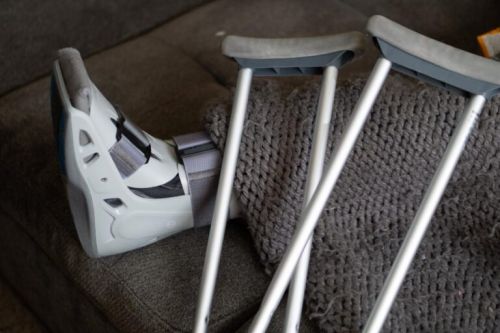 There are certain questions lawyers get asked with some frequency, including “What about my pain in suffering?” Mental anguish, pain and suffering, humiliation, embarrassment, annoyance, whatever term may apply, Virginia law places serious limitations on the recovery of money in a lawsuit for these emotional-type, non-pecuniary (i.e. non-monetary) damages. Let’s cover one big issue first: under Virginia law, non-pecuniary damages are not recoverable for breach of contract alone. See, e.g., Sea-Land Serv., Inc. v. O'Neal, 224 Va. 343, 354 (1982).…
Read More
There are certain questions lawyers get asked with some frequency, including “What about my pain in suffering?” Mental anguish, pain and suffering, humiliation, embarrassment, annoyance, whatever term may apply, Virginia law places serious limitations on the recovery of money in a lawsuit for these emotional-type, non-pecuniary (i.e. non-monetary) damages. Let’s cover one big issue first: under Virginia law, non-pecuniary damages are not recoverable for breach of contract alone. See, e.g., Sea-Land Serv., Inc. v. O'Neal, 224 Va. 343, 354 (1982).…
Read More
 In the transportation world, like every other industry, insurance is fundamental for protecting against risk and associated liabilities. The word “insurance,” however, causes most people and businesses to change the subject or postpone indefinitely coming to grips with the reality of their risk-management condition. Companies cannot afford to have this attitude, however, and must understand the coverages they have in place, what losses are actually covered, and how much of their risk exposure is insured. In other words, is your…
Read More
In the transportation world, like every other industry, insurance is fundamental for protecting against risk and associated liabilities. The word “insurance,” however, causes most people and businesses to change the subject or postpone indefinitely coming to grips with the reality of their risk-management condition. Companies cannot afford to have this attitude, however, and must understand the coverages they have in place, what losses are actually covered, and how much of their risk exposure is insured. In other words, is your…
Read More
 What portion of a personal injury settlement, verdict, or judgment goes to the government if the aggrieved party was insured through Medicaid? Just a few weeks ago, the Supreme Court of Virginia answered that question in Farah v. Commonwealth of Virginia, Department of Medical Assistance Services in an opinion authored by Justice Stephen R. McCullough. Farah’s Case Plaintiff Farah was working as a cab driver when he was gravely injured in a head-on crash by a driver traveling in the…
Read More
What portion of a personal injury settlement, verdict, or judgment goes to the government if the aggrieved party was insured through Medicaid? Just a few weeks ago, the Supreme Court of Virginia answered that question in Farah v. Commonwealth of Virginia, Department of Medical Assistance Services in an opinion authored by Justice Stephen R. McCullough. Farah’s Case Plaintiff Farah was working as a cab driver when he was gravely injured in a head-on crash by a driver traveling in the…
Read More
 Virginia law controlling the question of when an insurer has a duty to defend its insured is so well established and clearly understood that it hardly bears discussion – or, at least, it would seem so. Under Virginia’s familiar “eight corners” rule, “only the allegations in the complaint and the provisions of the insurance policy are to be considered in deciding whether there is a duty on the part of the insurer to defend and indemnify the insured.” AES Corp.…
Read More
Virginia law controlling the question of when an insurer has a duty to defend its insured is so well established and clearly understood that it hardly bears discussion – or, at least, it would seem so. Under Virginia’s familiar “eight corners” rule, “only the allegations in the complaint and the provisions of the insurance policy are to be considered in deciding whether there is a duty on the part of the insurer to defend and indemnify the insured.” AES Corp.…
Read More
© 2026 Setliff Law, P.C.| View Our Disclaimer | Privacy Policy